
There’s a theory that capsule-based GLP-1 delivery could match injections for appetite control without compromising your daily routine. You’re weighing a method that aims to protect the payload with a pH-responsive coating and moisture-optimized materials, helping provide steady exposure that may support satiety and slower gastric emptying. It’s natural to wonder how this could fit into real life—whether it truly helps with adherence, what safety monitoring looks like, and how it compares in cost and convenience to what you’re used to.
As you consider Slimlex, think about how this approach stacks up against conventional methods and what it would take for you to feel confident titrating and monitoring treatment. You deserve a solution that fits your day-to-day and your goals, with clear guidance on how to track effects and address any concerns along the way.
Key Points
- Capsule-based GLP-1 delivery offers on-the-go dosing with consistent pharmacokinetics, reducing day-to-day variability in appetite control.
- Distinctive capsule design protects the payload and provides pH-responsive release for gradual, reliable receptor engagement.
- Convenience and simplified regimen aim to improve adherence compared with injections or complex schedules.
- Real-world outcomes emphasize steady fullness, reduced cravings, and tolerability improvements tied to GI-friendly dosing.
- Safety, monitoring, and access considerations shape adoption through cost, availability, and post-market data.
How GLP-1 Capsules Work to Control Appetite
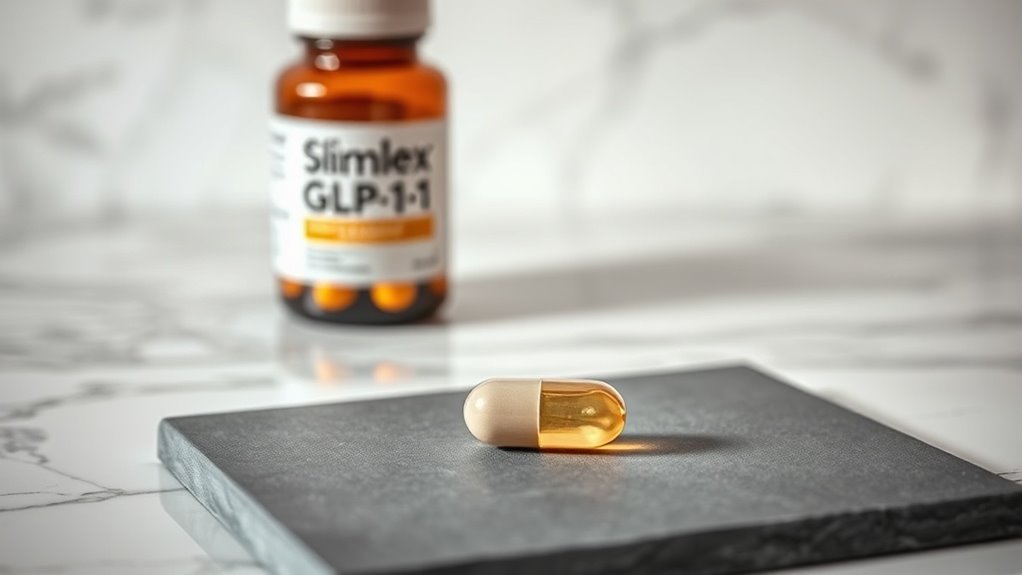
GLP-1 capsules act by delivering glucagon-like peptide-1, a gut-derived incretin that enhances insulin secretion in a glucose-dependent manner and slows gastric emptying. You assess how this mechanism translates to appetite regulation. The glp 1 mechanism involves central and peripheral signaling: reduced gastric motility, increased satiety through hypothalamic pathways, and modulation of meal-related glucagon and insulin responses. Capsule delivery aims to maintain therapeutic plasma levels with improved pharmacokinetic stability, enabling sustained receptor engagement. You review dose timing, absorption barriers, and potential variability due to GI transit. Evidence supports modest, consistent caloric reduction linked to delayed gastric emptying and enhanced meal termination signals. Consideration of tolerability, especially GI adverse events, is essential. Overall, the mechanism supports appetite control via glucose-dependent insulinotropic effects and satiety signaling.
The Convenience Factor: Why Capsule Delivery Appeals
Capsule delivery offers precise, on-the-go dosing that fits busy routines and supports consistent intake. The方便 convenience reduces the need for injections or complex regimens, potentially improving adherence in real-world use. This quick-acting format aligns with everyday mobility while maintaining measurable pharmacokinetic consistency.
Capsule Convenience
What makes capsule delivery compelling is its practical convenience: a once-daily or even twice-daily dose can replace multiple daily administrations, reducing disruption to daily routines. You’ll evaluate how capsule aesthetics and dosing practicality influence user acceptance, adherence, and perceived value, focusing on reliability, taste-neutrality, and handling. The following points summarize mechanism-aligned conveniences:
- Consistent release profiles support predictable pharmacokinetics
- Simple ingestion reduces constipation-related concerns and discomfort
- Precise capsule dimensions minimize swallowing effort and anchoring cues
- Packaging minimizes exposure and enhances portability
- Dosing practicality aligns with routine behaviors to boost adherence
Clinical implications emphasize tolerance, real-world adherence, and long-term satisfaction, guiding product development and patient education around capsule convenience in GLP-1 delivery.
On-the-Go Dosing
On-the-go dosing leverages the capsule’s portability and predictable release to minimize on-day variability, supporting adherence across diverse routines. You’ll benefit from a discreet, measured approach that fits busy schedules, without timing complexity. The capsule design emphasizes consistent pharmacokinetics, reducing fluctuations caused by meals or activity. Precision engineering maintains dose integrity from packaging to ingestion, enabling reliable onset and duration. For clinicians, this translates to predictable effects and clearer titration paths. For patients, convenience reduces barriers to daily use and reinforces routine adherence. Consider packaging that safeguards stability yet permits rapid disposal. Table below illustrates how form factors map to real-world use.
| Form factor | Use case | Benefit | |||
|---|---|---|---|---|---|
| Portable | Travel-ready | Low interference with day plans | Stable release | Consistent exposure | Improved adherence |
Slimlex’s Distinctive Features and Benefits
Slimlex leverages a distinctive capsule design to optimize gastric release timing, supporting consistent GLP-1 exposure. You’ll benefit from explicit appetite-control mechanisms and predictable dosing, backed by pharmacokinetic data and clinical observations. What sets Slimlex apart is its integrated delivery profile and clear advantages over conventional formats, highlighting how each feature contributes to sustained satiety and adherence.
Distinctive Capsule Design
Slimlex’s distinctive capsule design emphasizes controlled release, robust stability, and user-centric handling. You’ll notice a precisely engineered shell that protects the active GLP-1 payload from gastric degradation while enabling gradual dissolution for sustained exposure. The formulation supports predictable pharmacokinetics, reducing peak-trough variability and aiding consistent appetite control.
- Distinctive capsule geometry minimizes masticatory loss and ensures uniform fill
- pH-responsive coating guards against premature release in the stomach
- Moisture-optimized hard capsule materials enhance shelf stability
- Clear, ergonomic dosing features improve user handling and compliance
- Boolean-safety mechanisms prevent accidental opening and dose dispersion
These design choices collectively advance appetite control by delivering a reliable, repeatable release profile, aligning with evidence-based expectations for capsule-based therapies.
Benefits for Appetite Control
How do Slimlex’s distinctive capsule features translate into better appetite control? You benefit from targeted GLP-1 release, improved gastric timing, and consistent dosing that supports satiety signals while minimizing peak-trough variability. The design reduces device-related sedation and delivers steady receptor engagement, aligning with clinical profiles of appetite suppression. You may experience more predictable post-meal fullness, better adherence, and reduced cravings compared with inconsistent formulations. This reliability helps you bypass myths about unpredictable outcomes from capsule-based therapies, reinforcing evidence-based expectations for weight-management support. Ethical considerations accompany device use, including safety monitoring and transparent labeling. In sum, the combination of controlled gastral residence, pharmacokinetic stability, and user-centric dosing contributes to tangible appetite-control benefits.
How Slimlex Stands Out
The distinctive features of Slimlex build directly on the appetite-control benefits discussed earlier, delivering precise pharmacokinetics and user-centric usability. You’ll notice how formulation aesthetics and capsule texture contribute to consistency, dosing accuracy, and ease of handling, supporting adherence. Distinctive attributes include targeted GLP-1 release timing, robust bioavailability, and a streamlined 1-capsule-per-day regimen that minimizes variability. Real-world use benefits encompass predictable satiety signals, reduced cravings, and a manageable side-effect profile in typical populations. Safety-focused design emphasizes inert excipients, validated constants, and quality-control checks that preserve stability across storage conditions. Together, these features yield reproducible outcomes and clearer consumer value, aligning pharmacology with practical use.
- formulation aesthetics
- capsule texture
- targeted release timing
- bioavailability robustness
- adherence-focused design
Dosing Guidelines and Practical Use
Dosing guidelines for the GLP-1 capsule should be followed meticulously to ensure consistent appetite suppression while minimizing adverse effects. You start with a low-dose titration, incorporating gradual increases per manufacturer instructions and clinical data. For practical use, administer capsules once daily with water, preferably at the same time each day to stabilize plasma levels. Do not crush or chew; swallow whole. If a dose is missed, do not double the next dose—resume as scheduled unless advised otherwise by a clinician. Track early response and tolerability over 2–4 weeks, noting any abdominal discomfort, nausea, or delayed gastric emptying. Adjust only under medical guidance, and consider coordinating with dietary fiber intake and physical activity to optimize outcomes within the established dosing guidelines and practical use framework.
Potential Side Effects and Safety Considerations
What are the key safety considerations when using GLP-1 capsule therapy, and how do they shape risk management? You’ll weigh potential side effects against benefits, monitor for adverse events, and tailor therapy to comorbidities. Evidence-based criteria guide dosing continuity, electrolyte balance, and GI tolerance, while renal and hepatic considerations are assessed. Safety considerations emphasize prompt reporting of alarming symptoms and dose adjustments to minimize risk.
- Potential side effects: GI symptoms, nausea, vomiting, or diarrhea risk assessment
- Injection-like swallowing effects, and capsule handling implications
- Hypoglycemia risk with concurrent antidiabetic therapies
- Pancreatitis or gallbladder concerns in susceptible individuals
- Cardiovascular safety signals and renal/hepatic function monitoring
Accessibility, Cost, and Availability Outlook
How accessible are GLP-1 capsule therapies, and what are the implications for cost and availability in real-world settings? You’ll see limited early access, with regulatory timelines and payer negotiations shaping uptake. Accessibility concerns arise from formulation storage, dosing convenience, and distribution channels that differ from injectable regimens, potentially narrowing geographic reach. Cost transparency is critical for decision-makers: capsule-based delivery may reduce administration costs but could incur higher per-dose drug prices, specialty manufacturing, and packaging requirements. Real-world availability hinges on pricing negotiations, formulary inclusion, and patient eligibility criteria. Early adopters may benefit from targeted reimbursement strategies, while broader access will require clear labeling, consistent supply chains, and robust pharmacoeconomic assessments. Ongoing post-market surveillance will inform pricing models and equity of access across populations.
Real-World Use: Patient Experiences and Outcomes
Real-world use of GLP-1 capsule therapies will hinge on how patients experience practicality, adherence, and outcomes outside controlled trials. You’ll observe variability in patient adherence, influenced by dosing practicality, injection-like habit formation, and capsule timing relative to meals. Early data suggest modest weight loss with real-world tolerability comparable to trials, though gastrointestinal side effects may affect persistence. Practical uptake depends on dosing convenience, refill consistency, and perceived value versus traditional routes. Outcomes trackable in day-to-day settings include satiety signals, hunger reduction, and activity levels, with differential responses by baseline BMI and comorbidity profiles.
- Real-world adherence patterns and refill consistency
- Dosing practicality versus patient lifestyle
- Weight trajectory and metabolic markers
- Gastrointestinal tolerability and discontinuation rates
- Patient-reported satisfaction and perceived value
Common Questions
How Long Before Results Are Noticeable With Slimlex Capsules?
You’ll typically start noticing effects within 2 to 6 weeks, though individual responses vary. Your body’s slow acting mechanism may delay noticeable changes in appetite and weight, especially if you’re not consistent with dosing. Don’t attribute early changes to the placebo effects alone; track objective measures like meals and portions. If you don’t see any impact after 6 weeks, consult a clinician to reassess dosage or alternatives, ensuring safety and evidence-based practice.
Can Slimlex Capsules Replace Exercise or Diet Changes?
Slimlex capsules cannot replace exercise or diet changes. You may experience improved appetite control and modest weight loss, but efficacy relies on concurrent lifestyle adjustments. For real Slimlex efficacy, adherence to a balanced diet and physical activity remains essential. You’ll likely see synergy when integrating the capsule into a structured plan rather than as a standalone fix. Lifestyle integration is key; medications support but don’t substitute sustainable behavior changes. This approach is evidence-aligned and clinically prudent.
Are There Dietary Restrictions While Using Slimlex Capsules?
Yes, there can be dietary restrictions and potential interactions to consider when using Slimlex capsules. You should avoid combining them with other GLP-1 therapies unless advised, and monitor for signs of hypoglycemia if you’re on diabetes meds. Maintain a balanced diet and avoid extreme calorie restriction. Always disclose all supplements to your clinician, since dietary restrictions and potential interactions with prescription drugs or supplements could affect safety and efficacy.
Do Slimlex Capsules Require Prescription or Medical Supervision?
You should know that Slimlex capsules typically require medical supervision and may need a prescription, depending on your location. Slimlex regulations dictate that dosing, monitoring, and safety checks be managed by a clinician to reduce risks. If you’re considering use, you’ll want to consult a healthcare professional who can assess your medical history, review potential interactions, and establish appropriate supervision. Medical supervision ensures appropriate dosing, side-effect management, and ongoing evaluation of efficacy and safety.
What Is the Long-Term Safety Profile for Slimlex Capsules?
Long-term safety data for Slimlex capsules are limited in peer-reviewed trials, so you should view it with caution. Current evidence suggests a favorable short-term profile, but long term safety and risk assessment remain uncertain due to potential gastrointestinal, cardiovascular, and metabolic effects. If you’re considering use, discuss baseline risk factors and monitor for adverse events over time. Avoid prolonged use without medical supervision, and weigh benefits against unknown long-term risks in your risk assessment.
All Together
You’re drawn to Slimlex GLP-1 capsules because convenience and efficacy seem to align: a capsule-based dose fits real-world schedules, and a controlled-release profile mirrors proven effects. This combination supports your satiety goals without injections, with onset timed to your meals and steady exposure that helps curb spikes. But remember, real progress comes from thoughtful use—titrating the dose, monitoring safety, and navigating cost and access. You have the chance to make a practical, evidence-informed move that fits your life, not just a stylish idea.
Now it’s time to take action. Commit to a plan that prioritizes careful dosing, regular check-ins, and honest appraisal of results, so you can ride the momentum toward better energy, appetite control, and confidence. You’ve got the opportunity to align convenience with real-world outcomes—start today, and own your health journey with purpose and persistence.
