
If you’re weighing options for a top synbiotic, you’ll want labels that clearly show genus, species, and CFU, plus explicit prebiotic and postbiotic details. Look for shelf-stable formulas with acid-friendly capsules and third-party testing to back potency. Consider delivery tech, diverse strains, and vegan ingredients, then weigh how each option aligns with digestion, immunity, and IBS goals. Curious how these 5 stacks up against your needs? Let’s start with what matters most to you.
Key Points
- Group A offers a 3-in-1 synbiotic capsule with XOS prebiotic, soil-based Bacillus probiotics, postbiotic Tributyrin, and a 1-for-1 vitamin support program.
- Group B provides a shelf-stable, all-in-one 30-capsule formula featuring Lactobacillus and Bifidobacterium strains plus chicory root inulin and absorption support.
- Group C uses 4B CFU with time-release BIO-Tract pearls for targeted intestinal delivery and a 60-day daily probiotic-prebiotic regimen.
- Group D delivers 60B CFU across 10 strains with acid-resistant capsules and organic prebiotics, emphasizing gut health, digestion, and immune balance.
- Group E pairs high-potency 60B CFU across 10 strains with organic prebiotics in a shelf-stable, acid-resistant format for daily immune and digestive support.
| Synbiotic 3-in-1: Prebiotic Probiotic Postbiotic Capsule | 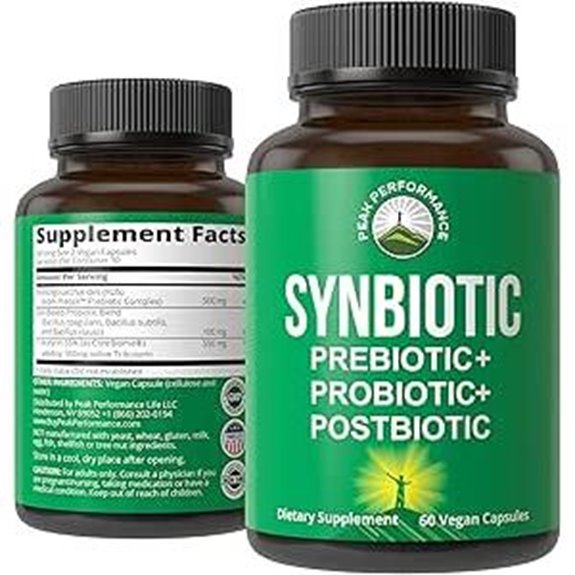 | Best All-in-One | Type: Synbiotic capsule (prebiotic + probiotic + postbiotic) | CFU per serving: Not specified (overall 3-in-1 concept) | Delivery format: Capsule | VIEW LATEST PRICE | Read Our Analysis |
| Codeage Daily Synbiotic Probiotic Supplement (30 Capsules) | 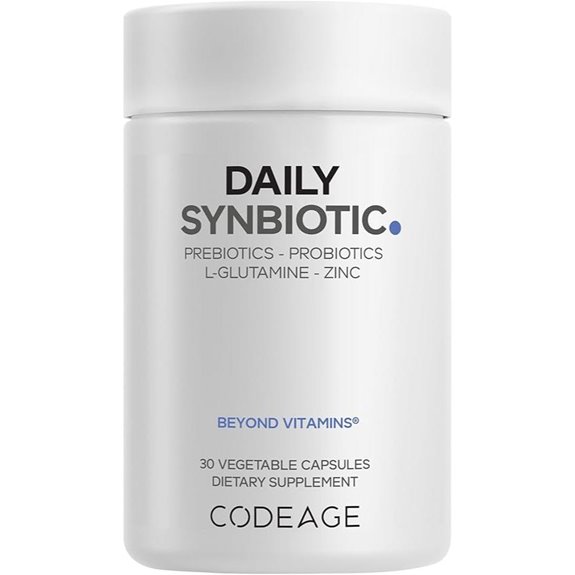 | All-In-One Support | Type: Synbiotic probiotic capsule (prebiotic + probiotic) | CFU per serving: Not specified | Delivery format: Capsule | VIEW LATEST PRICE | Read Our Analysis |
| Earth’s Pearl Probiotics for All—4B CFU 60-Day Supply |  | Daily Digestive Defense | Type: Probiotic with prebiotics (pearled probiotic/prebiotic) | CFU per serving: 4 Billion CFU | Delivery format: Capsule | VIEW LATEST PRICE | Read Our Analysis |
| Physician’s Choice Probiotics 60B CFU 30ct 10 Strains |  | Clinically-Stable Formula | Type: Probiotic with organic prebiotics | CFU per serving: 60 Billion CFU | Delivery format: Capsule | VIEW LATEST PRICE | Read Our Analysis |
| Physician’s CHOICE Probiotics 60B CFU – 60ct |  | High-POD Probiotic Strength | Type: Probiotic with organic prebiotics | CFU per serving: 60 Billion CFU | Delivery format: Capsule | VIEW LATEST PRICE | Read Our Analysis |
More Details on Our Top Picks
Synbiotic 3-in-1: Prebiotic Probiotic Postbiotic Capsule
If you’re looking for a single supplement that covers multiple gut and immune-health bases, the Synbiotic 3-in-1 capsule is a strong fit. This product combines prebiotic XOS, probiotic Bacillus subtilis and Bacillus coagulans, and a postbiotic core with Tributyrin 55% extract, all in vegan capsules for both women and men. It’s clinically tested, designed for digestive, gut, GI, and immune health, and offers stability with soil-based strains that survive stomach transit. Prebiotics boost bifidobacteria; postbiotics support immune health and gut walls. One bottle helps millions, and your purchase supports vitamins for at-risk children through the 1-for-1 program.
- Type:Synbiotic capsule (prebiotic + probiotic + postbiotic)
- CFU per serving:Not specified (overall 3-in-1 concept)
- Delivery format:Capsule
- Shelf stability:Shelf-stable (capsules)
- Target audience:Women & Men
- Core benefit emphasis:Digestive, gut health; immune support
- Additional Feature:Clinically tested ingredients
- Additional Feature:1-for-1 donation program
- Additional Feature:Vegan capsules for all genders
Codeage Daily Synbiotic Probiotic Supplement (30 Capsules)
Codeage Daily Synbiotic Probiotic Supplement stands out for busy, health-minded adults who want a shelf-stable, all-in-one formula. You get five probiotic strains, including Lactobillus rhamnosus and Lactobacillus plantarum, plus Bifidobacterium lactis and Bifidobacterium longum. The blend features prebiotic organic chicory root inulin, L-glutamine, DGL, and zinc L-carnosine to support gut health. BioPerine aids absorption, while the product is vegan, non-GMO, dairy-, soy-, and gluten-free, and manufactured in the USA in a cGMP facility. With 30 capsules, it’s a convenient, one-month supply that doesn’t require refrigeration. Shelf-stable and versatile for daily use.
- Type:Synbiotic probiotic capsule (prebiotic + probiotic)
- CFU per serving:Not specified
- Delivery format:Capsule
- Shelf stability:Shelf-stable (capsules)
- Target audience:General adults (vegan, non-GMO; no specific gender emphasis)
- Core benefit emphasis:Digestive/gut health; absorption aids
- Additional Feature:Shelf-stable, no refrigeration
- Additional Feature:L-Glutamine & Zinc L-Carnosine
- Additional Feature:BioPerine absorption aid
Earth’s Pearl Probiotics for All—4B CFU 60-Day Supply
Earth’s Pearl Probiotics for All offers a 4 billion CFU, 60-day supply with pearl-shaped capsules and a time-release formula that delivers live bacteria to your gut, making it a strong choice for busy individuals seeking daily digestive support. You get 4B CFU in a 60-day supply, with BIO-Tract delivery that’s 15x more effective at reaching your intestinal tract. The daily regimen combines probiotics and prebiotics to nourish good bacteria and introduce beneficial strains, supporting digestive health and potentially easing bloating or IBS symptoms. Free from GMOs, gluten, and lactose, it’s proudly made in the USA.
- Type:Probiotic with prebiotics (pearled probiotic/prebiotic)
- CFU per serving:4 Billion CFU
- Delivery format:Capsule
- Shelf stability:Not explicitly stated, but implied capsule format
- Target audience:Women, Men, Kids
- Core benefit emphasis:Digestive health; relief from IBS symptoms
- Additional Feature:Pearl-shaped capsules
- Additional Feature:15x more effective delivery
- Additional Feature:60-Day supply
Physician’s Choice Probiotics 60B CFU 30ct 10 Strains
Looking for a high-strength, all-in-one probiotic option? Physician’s Choice Probiotics delivers 60B CFU per serving with 10 strains plus organic prebiotics in a non-refrigerated, shelf-stable bottle. Designed for both women and men, this 30-count bottle supports gut health, digestion, and immune balance by promoting a diverse microbiome and improving occasional constipation, diarrhea, gas, and bloating. The acid-resistant capsules maximize survival through gut passage, while third-party testing and USA manufacturing back quality and potency. Daily use is simple with one capsule per day; it’s a science-informed choice crafted with Physician input for reliable support.
- Type:Probiotic with organic prebiotics
- CFU per serving:60 Billion CFU
- Delivery format:Capsule
- Shelf stability:Non-refrigerated (shelf-stable)
- Target audience:Women & Men
- Core benefit emphasis:Immune, digestive & gut health
- Additional Feature:10 strains included
- Additional Feature:Organic prebiotics included
- Additional Feature:Non-refrigerated formulation
Physician’s CHOICE Probiotics 60B CFU – 60ct
Physician’s CHOICE Probiotics 60B CFU – 60ct stands out for anyone seeking a high-potency, multi-strain probiotic with added organic prebiotics. You get 60B CFU per serving from 10 strains plus organic prebiotics, targeting immune, digestive, and gut health. This shelf-stable bottle uses acid-resistant capsules designed to maximize colonization and survive gut passage. It supports gut diversity and can help with occasional constipation, diarrhea, gas, and bloating for both women and men. Backed by science, third-party tested, and manufactured in the USA, it combines quality control with a robust formulation for daily use.
- Type:Probiotic with organic prebiotics
- CFU per serving:60 Billion CFU
- Delivery format:Capsule
- Shelf stability:Shelf-stable
- Target audience:Women & Men
- Core benefit emphasis:Immune, digestive & gut health
- Additional Feature:60 Billion CFU per serving
- Additional Feature:10 diverse strains
- Additional Feature:60-count bottle
Factors to Consider When Choosing Synbiotic Supplement

When you pick a synbiotic, consider the probiotic strain variety, as different strains support different goals. Also look at prebiotic types, shelf stability, and capsule design to ensure the product fits your routine and stays effective. Finally, align your choice with your target health benefits, whether digestion, immunity, or beyond.
Probiotic Strain Variety
Probiotic strain variety shapes the range of gut species your synbiotic can support, so look for products that list multiple strains (like Lactobacillus and Bifidobacterium) to address diverse microbiome needs. A mix of strains with different functional roles can offer broader benefits than a single-strain formulation, supporting gut motility, immune modulation, and barrier integrity. Remember, higher CFU counts don’t guarantee better outcomes; effectiveness hinges on strain quality, compatibility, and delivery method, such as acid-resistant capsules that survive stomach acidity. Shelf stability and storage requirements also impact real-world efficacy, so check how you’ll store the product. Strain specificity matters: align chosen strains with your health goals, whether GI comfort, IBS relief, or general balance, to tailor your synbiotic experience.
Prebiotic Types Matters
Choosing the right prebiotic is key to boosting your synbiotic’s effectiveness. Prebiotic types—FOS, inulins from chicory, and XOS—each ferment differently and target distinct gut bacteria, so your choice shapes which microbes get nudged. XOS specifically increases bifidobacteria in the colon and supports healthy digestion, backed by clinical evidence. Inulin-type prebiotics promote a broader range of beneficial bacteria but can cause gas or bloating for some people, so tolerance matters. You’ll want a prebiotic that aligns with your probiotic strains to maximize synbiotic synergy. Also consider source and processing: chicory-derived inulin versus XOS influence solubility, tolerance, and shelf stability in capsules. Pick a pairing that’s both compatible with your probiotics and well-tolerated for your routine.
Shelf Stability
Shelf stability matters because you want a synbiotic that stays effective from bottle to bottle. You’ll notice shelf-stable products don’t need refrigeration, making storage and travel easier. Some formulations use acid-resistant capsules to protect probiotics from stomach acid, boosting delivery to the gut. Shelf stability is often achieved with strains chosen for longer shelf-life and protective packaging or drying techniques. Prebiotic and postbiotic components should stay stable in the same container to preserve combined efficacy without refrigeration. Always confirm expiration dates and storage instructions, such as keeping in a cool, dry place, to maintain potency and prevent degradation. Look for clear labeling on storage and packaging to ensure you’re using the product within its effective window.
Capsule Design
Capsule design plays a key role in delivering synbiotics effectively. You’ll want acid-resistant capsules to boost probiotic viability as they pass through stomach acid and reach the gut. Choose materials that are vegan or align with your dietary preferences to avoid conflicts with your lifestyle. Capsule size and shape matter for swallowability and daily dosing convenience—pearl-shaped or standard forms can be easier to take consistently. Consider capsule integrity and coating: enteric vs. non-enteric coatings influence release timing and how well prebiotics or postbiotics interact with the probiotics. Clear labeling of capsule composition helps you assess allergen safety and ensure the product fits your overall synbiotic formulation. Prioritize options that balance durability, diet compatibility, and user-friendly design for steady daily use.
Target Health Benefits
A synbiotic supplement aims to improve digestive comfort, gut health, and immune function by combining prebiotics, probiotics, and postbiotics; when selecting one, consider the specific health outcomes you want, such as relief from bloating and gas, IBS symptom support, overall gut harmony, and potential immune benefits. You’ll want prebiotics like XOS or chicory root to boost beneficial bacteria, enhancing comfort. Choose probiotic strains known for GI transit resilience and shelf-stability, typically Lactobacillus, Bifidobacterium, or soil-based Bacillus strains. Postbiotics, including butyrate derivatives, can support immune health and barrier integrity even without live bacteria. Evaluate whether the product targets bloating relief, gas reduction, or IBS symptom management, and whether it supports broad gut harmony and immune modulation. Confirm label transparency and proper dosing to align with your goals.
Label Transparency
When evaluating synbiotic labels, you want clear, complete information that lets you verify potency and ingredients at a glance. Labels should clearly list all active ingredients, including each probiotic strain with genus, species, and CFU per serving, plus prebiotic and postbiotic components and their amounts. Ready-to-evaluate labels disclose exact CFU count at packaging and whether potency is guaranteed through expiration or by minimum level. They should state sourcing details (prebiotic sources like XOS or inulin; probiotic strain origins) and any third-party quality certifications or testing results. All allergens, fillers, binders, and artificial additives must be disclosed, along with potential cross-contamination statements (dairy, soy, gluten, etc.). Claims about shelf stability, storage requirements, and recommended daily dosage should be explicit and supported by labeling language.
Manufacturing Standards
Manufacturing standards matter because they guard quality, safety, and label accuracy. When you pick a synbiotic, prioritize products produced in certified facilities, ideally USA-based and cGMP-compliant, to help ensure consistent quality and safety. Look for evidence of third-party testing to verify purity, potency, and labeled CFU counts, along with strain viability. Confirm shelf-stability features that don’t require refrigeration and packaging designed to protect live cultures from moisture and heat. Check that all ingredients—prebiotics, probiotics, and any postbiotics—are produced under strict quality controls with documented sourcing. Transparency helps you assess real-world efficacy: expect clear labeling of strains, CFU per serving, total bottle CFU, and storage instructions for accurate usage and safety.
Diet Compatibility
Choosing a synbiotic that fits your diet starts with evaluating how well it matches your everyday eating plan. When you pick, check vegan-friendly packaging and avoid animal-derived shells or additives. Confirm prebiotic components like inulin or XOS fit your needs—gluten-free, dairy-free, non-GMO. Look for probiotic strains that align with your restrictions, such as dairy-free cultures if you’re lactose-intolerant. Inspect any added binders or fillers to ensure gluten-free or soy-free compliance. Read the label for shelf-stability and storage instructions that match your routine, especially if you can’t refrigerate. If anything triggers discomfort or conflicts with your diet, reassess the product before purchasing. A clearly labeled, diet-conscious synbiotic helps you maintain consistency without compromising your dietary goals.
Common Questions
How Do Synbiotics Differ From Probiotics Alone?
Synbiotics pair probiotics with prebiotics, while probiotics alone only deliver live microbes. You’ll notice the contrast: with synbiotics, the prebiotic fiber helps those microbes thrive, guiding your digestion, immunity, and gut comfort more efficiently. Probiotics scatter into your gut without built-in food, so effects can be briefer. In short, synbiotics optimize the environment for the probiotics you ingest, boosting their chances to colonize and confer sustained benefits compared to using probiotics alone.
Are Synbiotics Safe for Children and Seniors?
Yes, synbiotics can be safe for children and seniors when you choose products with appropriate strains and doses, and you discuss them with a healthcare provider first. Start small, monitor for stomach upset, and watch for allergies or interactions with meds. Look for reputable brands, clear ingredients, and dosage guidance. Avoid high-risk populations unless approved. If you notice persistent symptoms, discontinue and seek medical advice promptly.
What Signs Imply a Synbiotic Isn’T Working?
Signs a synbiotic isn’t working include no digestive relief after a couple weeks, persistent gas or bloating, worsening symptoms, stomach pains, or unusual stool changes. If you still feel off after 4–6 weeks, or you experience severe bloating, allergic reactions, or new symptoms, stop use and talk to your clinician. Track things daily, be consistent with dose, and consider a different strain blend or probiotic formulation. Your body needs time and the right mix.
Should I Take Synbiotics With Meals or Fasting?
You should take synbiotics with meals. An interesting stat: many people report better gut comfort when taken with food, since stomach acid is buffered and more probiotics survive digestion. You’ll want to pair them with a balanced meal containing fiber for optimal effect. If you’re sensitive, start small and gradually increase. Avoid taking them on an empty stomach right before workouts or bed, as digestion shifts with those activities. Listen to your body and adjust timing accordingly.
Do Synbiotics Require Refrigeration for Potency?
You don’t always need refrigeration for potency, but it depends on the product. Many synbiotics are shelf-stable and stored in a cool, dry place. If the label says refrigerate after opening, follow that instruction to preserve viability. Some strains tolerate room temperature, while others do best chilled. Check storage guidelines, avoid heat and humidity, and keep the bottle tightly closed. If in doubt, contact the manufacturer for specifics about your blend.